

Wouldn't You Say?
A review of the new book from CELDF organizer Ben Price

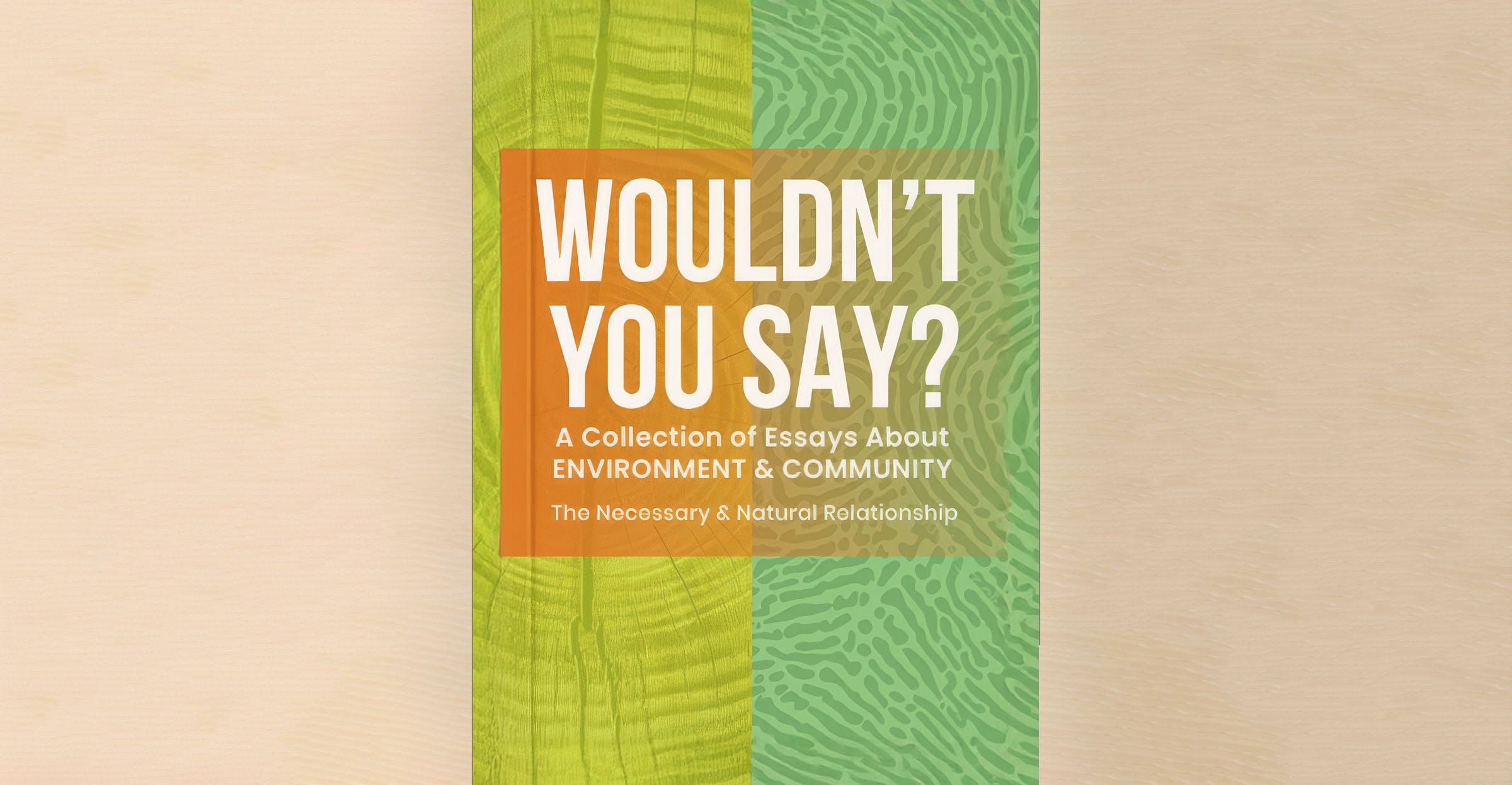
Two months ago, we here at CELDF published a book-length collection of essays written by our longtime organizer Ben Price, one of the people behind the first Rights of Nature law in the world in the western legal system. Ben has been an activist for decades, and this collection brings together several years of writings examining the ecological crisis and what we can do about it.
Today, we’re sharing a review of the book written by our friends Blake and Tzintzun, the two halves of the Talking Rivers Collective.
We live under an empire of extractive materialism, for which our only escape is to remember that we are part of Nature. However, it is the nature of this economic driven nightmare to cast reality into a reductionist shadow. Up is down, down is up, and Nature is painted as a petty prop in the advertisement of human existence. Thus, embracing the real, in community and ecocentric humanity, is an almost impossible feat, wouldn’t you say?
Well, not if you read “Wouldn’t You Say,” the new book by the rebel community organizer and scholar Ben Price. Ben Price, one of the core team members at the Community Environmental Legal Defense Fund (CELDF), lays out a clear path for the collective liberation of both humans and the world they are a part of. The problems appear to be many and insurmountable, and Price does clearly illustrate the origins of the current planetary and society crisis. This itself is a notable feat, but Price doesn’t remain cemented in narratives of doom and gloom. “Wouldn’t You Say” is instead a clear step by step guide for all human organizers who want to free their communities from the chains of empire and technocratic oblivion. Price offers an alternative, and that is what we all desperately need at this moment in time.
One of the themes that Ben Price explores in detail is the Rights of Nature, a global movement that Price was instrumental in launching. Price is one of the CELDF lawyers who drafted the first Rights of Nature law in Tamaqua Borrow, Pennsylvania, in 2006. Since then, the Rights of Nature movement has flown around the world and has planted many seedlings of transformative action. Price’s actions and guidance continue to inspire humans to stand up for the other-than-human neighbors, and work to defend the personhood of all the people (human and beyond) that make up their communities. However, like all global movements, Rights of Nature doesn’t come without its critics, even admits anti-colonial and Indigenous circles.
There are many who are rightfully hesitant of right based frameworks and distrust the settler colonial legal system that has (and continues to) legitimized and facilitate extractivist bloodshed. Price himself clearly lays out the dangers of considering Rights of Nature as the end of the road. Instead, Price present Rights of Nature as just one steppingstone in the process of embracing the fact that WE ARE ALL NATURE. Price isn’t shy about the complexities and contradictions of his work. The book even explores the semantics of “Rights of Nature,” and how these three words distance human from Nature, treating Nature as something other than human.
In “Wouldn’t You Say,” Price takes step beyond Rights of Nature, and lays out the steppingstones to how to internalize what is important to us and step beyond coercive systems. We invite all the organizers and scholars who are critical of Rights of Nature to read Price’s book. We also invite everyone who wants to actually help their communities to read, reread and share Price’s words. “Wouldn’t You Say” is both a manual of ecocentric transformation and an invitation. An invitation to us, the reader, to break down all the remaining borderlines that partition our lives and become truly part of Earth and ourselves.
Click here to learn more about the book or order a copy. Both paper copies and ebooks are available.
About the Authors
Talking Wings creates ECO-CENTRIC stories, sharing the voice of Nature (the collective of ecosystems to which we belong). Through art and circular conversations, Talking Wings invites humans to find new ways to acknowledge and respect the rights of Nature, Water and all the beings that make up this world.
Talking Wings is primarily comprised of the artist/organizer couple, Blake Lavia & Tzintzun Aguilar-Izzo, acting as settlers from a settler community in traditional Haudenosaunee territory, specifically the territory of the Kanien’keha:ka (Mohawk) Nation. Blake and Tzintzun are both currently collaborating with Talking Rivers, Inc. to educate human communities about the rights (and rites) of rivers and their ecosystems.
CELDF Updates
Periodically, we’ll use this space in the newsletter to update you on what we’re doing. Here’s a few updates on CELDF’s recent work.
Ben Price was interviewed on Project Censored about the book. You can view that interview here:
The Great Lakes and State Waters Bill of Rights, introduced into the New York state legislature last month, is gaining some momentum. Media coverage has been widespread (1, 2, 3, 4, 5, 6, 7, 8), with more stories coming in every day. We encourage New York residents who want to support the bill, and people in other locations who want to bring similar laws to their communities, to contact us to discuss how to do so.
Over the past two months, our organizers participated in a symposium on environmental issues of the Great Lakes, spoke as part of the More Than Human Life (MOTH) project at NYU, addressed students in university classrooms, and presented as part of an expert panel discussion on the rights of wetlands. Stay tuned on our social media for updates on these projects, and we’ll share videos, photos, and more here as well.
We’re launching a new podcast here soon. You’ll be able to subscribe here on Substack and get every episode in your email inbox, and you’ll also be able to subscribe using your podcast app of choice — Spotify, Apple Podcasts, etc. We hope to launch the first episode next week.